Tuesday, October 19, 2010

Highlights of Hakone Free Pass Route

Hakone Free Pass Loop:
Hakone Machi (Lake Ashi cruise)- Togendai - Sounzan(Ropeway) - Gora (Cable car) - Hakone Yumoto (Train) (can also be done in reverse)

On our first day in Hakone, we started our tour with a bus ride from our hotel, the Fujiya to Moto Hakone. The weather was not in our favour, with intermittent rain and wind. But armed with borrowed hotel umbrellas, we plodded on. Our first stop was the Old Cedar Highway. It was awesome walking on the footpath surrounded by 400 year old cedar trees. The tall sturdy trees provided some respite from the rain and it was lovely to enjoy the serene surroundings.


From the Cedar Highway, we made our way on foot to Hakone Machi at Lake Ashi to board the pirate cruise boat to the other side of the Lake. At this stage, it was pouring cats and dogs. We really couldn't see much and as luck would have it, a bus-load of tourists came on board the ship, turning the pirate boat into a real pirate boat of the past - loud and noisy!


We went through the rest of journey on the ropeway, cablecar and train, just going through the motion and not really able to enjoy the sights, because it was just too dark, wet and cold. Fortunately for us, the weather turned and we had beautiful blue skies and bright sunshine the next day. We decided to repeat the Hakone Loop, and we were glad we did. What a difference from the day before! Instead of looking out from blurry windows filled with raindrops, we could actually enjoy the beautiful scenery of the lake and volcano mountain.


I thoroughly enjoyed the ropeway as it gave a bird's eye view of the volcano craters at Owakudani. The hot springs water from the volcano are channeled by pipelines to the various resorts in Hakone.


Be prepared to hold your nose because the sulphur fumes smells like rotten eggs!


Whist we're on the subject of eggs, every visitor must try the "black egg" at Owakudani. These eggs are 3/4 boiled, and are cooked in the volcano hot springs. Apart from the black shell, they taste just like normal eggs.


Still a couple of volcano-boiled eggs didn't quite satisfy the hunger pangs after we completed the loop at Gora, so we headed to the Gyoza Centre, a cosy little cafe which is about 1 km from the train station for a meal of dumplings.


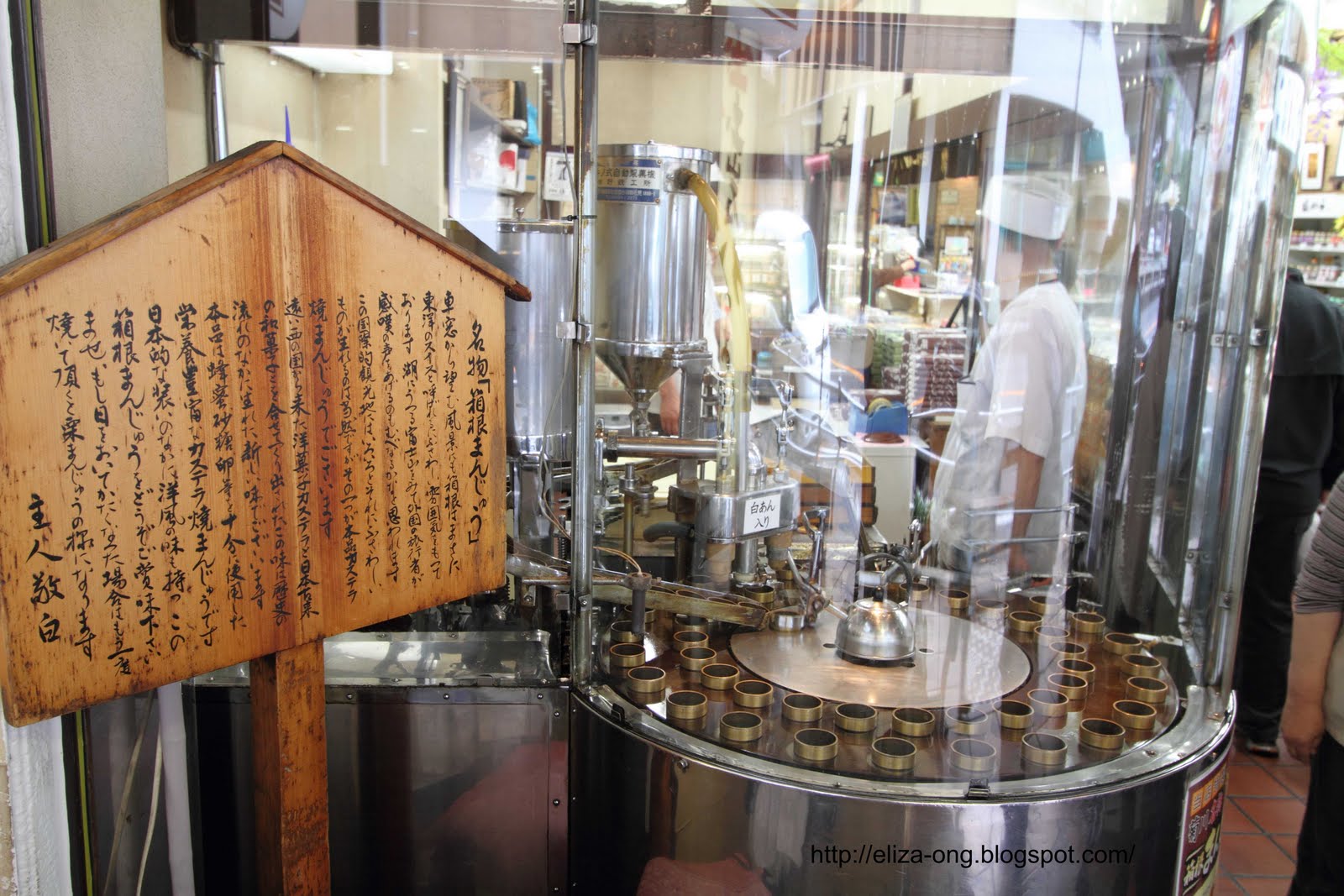
After that we hopped on the train for a slow ride down to Hakone Yumoto (Note: the bus is a faster way to travel, where available. From Gora, you must take the train.) At Hakone Yumoto town, we browsed around the 2 rows of shops, enjoying more food! It was particularly enjoyable seeing how the snacks were made.

Sunday, September 26, 2010

The Best of Hakone - Hakone Free Pass

The lovely "onsen" (hot springs) town of Hakone is a perfect getaway spot from the hustle and bustle of Tokyo city. The locals think so too, so be warned of the crowds during weekends and holidays. If you're a visitor, it would be best for you to plan a trip during a weekday if you prefer a more relaxing getaway without the maddening crowds.

Located around 100 kms West of Tokyo, the best way to experience Hakone is to get the Hakone Free Pass. The Hakone Free Pass provides a round trip return ticket from Shinjuku Station to Hakone as well as unlimited boarding of participating buses, ferries, trains, cable car and ropeway for 5,000 yen (2 days) or 5,500 yen (3 days). If you're not planning to return to Tokyo, consider getting the Hakone Free Pass from Odawara (3,900 yen) and just buying the 1 way ticket from Shinjuku Station to Odawara. I would also highly recommend paying an additional 870 yen one way to upgrade to the Odakyu Ltd. Express Romance Car for a more comfortable ride.

You can book the pass on-line and collect it at the Odakyu Sightseeing Centre in Shinjuku Station. They have a counter for international visitors. Together with your pass, you will get a circuit map which shows you the best way to get around Hakone using the various forms of transportation below:

Hakone Free Pass Transportation:
1. Odakyu Romance Car (pay to upgrade)
- From Shinjuku Station to Odawara/Hakone Yumoto

Hakone Tozan Bus
2. - The most efficient way to travel within Hakone


3. Hakone Tozan Train
A leisurely 40 minute ride from Hakone-Yumoto to Gora.


4. Hakone Sightseeing Cruise (Lake Ashi)
A splendid way to view the beauty of Lake Ashi aboard a pirate ship: Togendai - Motohakone-ko - Hakone-machi


5. Hakone Ropeway
Enjoy the panaromic view of the the mountain and hot springs: Sounzan to Togendai


6. Hakone Tozan Cable car
Take the short ride from Gora to Sounzan on this Swiss made cable car


The Hakone Free Pass is definitely worth getting. When we first arrived in Hakone, it was raining so we did the entire circuit without getting the full benefit of the views. Fortunately, we had blue skies the next morning, so we repeated the entire transport circuit, this time, with full enjoyment of the view. I'll share more about our experiences in the next post.

Tuesday, September 14, 2010

The Best Of Tokyo - Ramen

I love a bowl of steaming hot ramen noodles. Apart from the springy ramen noodles, crisp fried garlic slices and sliced roast pork served in creamy white miso soup, I love the Japanese hard-boiled egg, with its bright orange yolk. Here are 2 places which I found for good ramen in Tokyo. The first ramen shop which came recommended by the Lonely Planet is called Komen. It has a chain of 12 ramen shops in Tokyo. For non-Japanese speakers, look out for the 2 Japanese words encased in a large circle above the shop. I went to the Komen in Shinjuku (3-32-2, Shinjuku-ku, corner of Meiji-Dori and Koshu Kaido). This two storey ramen shop is big by ramen shop standards. They also have a branch in Harajuku.


Komen Ramen at Shinjuku


Big pots of stock for the ramen soup


Ramen with roast pork and white miso soup set - 990 yen

I stumbled onto the second ramen shop quite by accident. We were window shopping on the busy streets of Harajuku when this sign caught our attention. Walk down the stairs to a cosy little basement shop. Unfortunately, I don't know what the English name is but this shop is further down the street from the Lotteria at Takeshita Dori. The ramen is served in a stone bowl, which keeps it piping hot. In summer, the cold ramen is also quite popular. Personally, I found the ramen at this shop better than Komen.


Sigh...I wish I was back in Japan!

"We are noodle folk. Broth runs through our veins."
Mr. Ping, Kung Fu Panda (2008)

Friday, September 10, 2010

The Best of Tokyo - Cirque De Soleil's ZED

A friend recommended us to watch Cirque De Soleil in Tokyo, a recommendation that we were glad to have followed. Tokyo's Cirque de Soleil features the performance - ZED, a program that is shown only in Japan. Located at the Tokyo Disney Resort (10 minutes walk from JR Maihama Station on the Keiyo Line or Musashino Line to the Theatre via IKSPIARI and the Disney Ambassador Hotel), the Cirque du Soleil Theatre Tokyo is a resident theatre for Cirque du Soleil, designed specially for ZED.


We opted for the non-peak show at 4 p.m which is cheaper by 1,000 Yen compared to the 1 p.m. peak show performance. For foreigners, if you want to book your tickets on-line, go to the HIS Travel website which caters to non-Japanese speaking clientele.

Since the Cirque du Soleil Theatre Tokyo is located next to the Ikspiari shopping mall, you could spend the whole day here, enjoying some live entertainment shopping and eating first before catching the Cirque de Soleil performance later in the afternoon.


On a hot summer day, pop by Folletti Gerutta for a cool gelato. It's worth your while to brave the queues.


Be sure to look out for the Mickey Mouse buses and trains which ferry hotel guests to Tokyo Disneyland.


As with the theatre, the story of ZED was specially developed for Japan. The main character is ZED, a blonde afro-hair-styled "living poem" in the imaginary world of Arcana. The performance opens with a pair of hilarious clowns, and progresses to various breathtaking acts comprising high wire, bungee, flying trapeze, juggling, lassos, etc, etc. While not a flawless performance, the show is highly entertaining with outstanding special effects and high energies levels. One can't help but be drawn to ZED's adventures.


All in all, catching the Cirque de Soleil performance makes for a nice day trip out of Tokyo city!

Tuesday, August 24, 2010

Being Thankful...

I received this email from a friend. It's about being looking at life from a different perpective and being thankful for things we ordinarily complain about.

I am thankful:

For the wife
Who says it's hot dogs tonight,
Because she is home with me,
And not out with someone else.

For the husband
who is on the sofa
being a couch potato,
because he is home with me
and not out at the bars.

For the teenager
who is complaining about doing dishes
because it means she is at home,
not on the streets.

For the taxes I pay
because it means
I am employed .

For the mess to clean after a party
because it means i have
been surrounded by friends

For the clothes that fit a little too snug
because it means
I have enough to eat.

For my shadow that watches me work
because it means
I am out in the sunshine

For a lawn that needs mowing,
windows that need cleaning,
and gutters that need fixing
because it means I have a home

For all the complaining
I hear about the government
because it means we have freedom of speech.

For the parking spot I find at the far end of the parking lot
because it means I am capable of walking
and i have been blessed with transportation

For my huge heating bill
because it means
I am warm.

For the lady behind me in church
who sings off key
because it means
I can hear.

For the pile of
laundry and ironing
because it means
I have clothes to wear.

For weariness and aching muscles
at the end of the day
because it means I have been
capable of working hard.

For the alarm that goes off
in the early morning hours
because it means I am alive.

And finally, for too much e-mail
because it means I have friends who are thinking of me.

Friday, June 25, 2010

The Best of Tokyo - Gardens, Markets & Temples

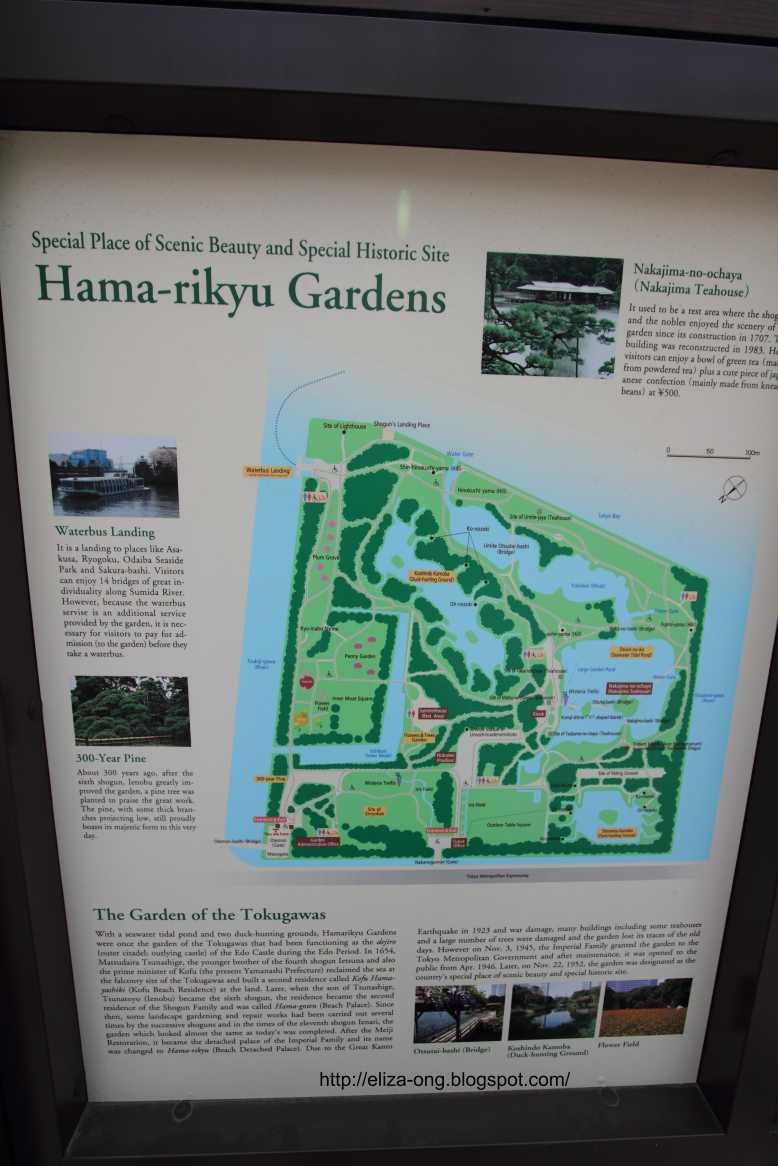
Despite the towering buildings that crowd Tokyo city, pockets of green oasis can be found to get away from the crowds. Located alongside Tokyo Bay and within walking distance from Tsukiji Market, the Hama Rikyu is a wonderful garden to visit for a change of scenery. It also has historical significance as it was once the garden of the shogun lords during the Edo period.

After a fresh sushi breakfast from our early morning visit to Tsukiji Market, it was very pleasant to stroll around the well-landscaped garden. The garden opens at 9am and has an entrance fee of 300 yen. The jewel in the crown in the Hama Rikyu garden is probably the historic 500 year old pine tree.

To preserve this piece of living history, support beams have been built to hold up its sprawling branches, not unlike a bent old man needing a walking stick to support his weight. With skyscrapers in the background, this is a classic example of the harmonious relationship of modern and old Tokyo.


We were thrilled to discover a cherry blossom tree that was still flowering in mid-May. We can only imagine how spectacular the garden would have looked during peak cherry blossom season...


We found a spot on a hill to enjoy the full splendour of the Hama Rikyu Garden whilst enjoying our dessert picnic of Mochi (Japanese rice cake made of glutinous rice) which we picked up from Tsukiji Market.


If you're tired from all the walking (during our entire trip, we did the most walking in Tokyo!), catch a Tokyo cruise (720 yen) from Hinode Pier to Asakusa.

Whilst, it may not be the most scenic city cruise, it is nice to give your aching feet a rest and enjoy the breeze on your face during the 40 minute ride. If you like, you can even count the number of bridges you pass (Hint: it's more than 10).


At Asakusa, we headed to the Nakamise shopping street, a delightful area for souvenier shopping and more food tasting! We even managed to pick up a treat for our beagle from one of the stalls.


The Nakamise shopping street leads to the main grounds of Sensoji Temple.

Take some time to admire the intricate designs of the lamps on the red entrance gate.


We finished off our half day outing with a late lunch at Kagetudo, a rather cramped traditional restaurant. The small interior is decorated with old pictures. Tacked on its wooden walls, bags of toys (some of them reminds me of toys from my childhood days) are for sale.

This restaurant specializes in two main items. The main meal is a selection of cold or hot udon/soba noodles with tempura.


To finish off the simple meal, try the sweet Japanese bun (similar to polo bun). All in all, good value for money and a nice way to end our half day trip to Hama Rikyu Gardens and Asakusa.

Wednesday, June 23, 2010

The Best of Tokyo - Tsukiji Fish Market

The Tsukiji Fish Market ranks highly on my Tokyo to-do list. Generally, I am not a big fan of wet markets because they're crowded, dirty, wet and smelly. The Tsukiji Fish Market surprisingly is not dirty or smelly. It is busy and the floors are slippery, so do be careful and wear covered shoes with good grips.


When you're planning your holiday in Tokyo and want to include Tsukiji Fish Market in your itinerary, check out the calendar on the Tsukiji Fish Market website to make sure that the market is open on the day you plan to visit. Most tourists visit Tsukiji to see the tuna auction in action. On certain busy periods of the year, the tuna auction is off-limits to tourists. If you're lucky enough to be in Tokyo when viewing the tuna auction is permitted, make sure you're there early (officially 5.30 - 6.00 am, although I'm aware that some people are there even earlier). Even if the tuna auction is closed off to public, it's still worthwhile to make a trip to the market. The plus point is that you don't have to be there so early.

The closest train station to Tsukiji market is the Tsukijishijo Station on the Oedo line, which is about 1 minute walk to the market. You can also access the market via different stations served by the Hibiya, Asakusa, Ginza and JR Yamanote lines but be prepared for a 10-20 minute walk. Also take note that if you plan to be at Tsukiji before the trains start running in the early morning, you would need to take a taxi.

Outside the market, we came across a map of Tsukiji Market on the wall. To be honest, it wasn't much use to us in the end because once you're inside, it's easier to just wander around than to try to follow a map!


Tsukiji Fish Market is a working market. This means that for the vendors and buyers, this is business. As a result, a lot of them have very little patience with visitors getting into the way because they are too engrossed with taking pictures or admiring the fresh produce! So, do be mindful when you are in the market. The narrow pathways narrow are shared by both buyers and special market "trucks" that resemble steam rollers.


When we entered the market, we came across this stall selling dried seafood. We couldn't resist the wonderful selection of anchovies and Hokkaido scallops and walked away with a couple of bags.


We then wandered around the stalls (always mindful not to get in the way) admiring the wonderful and sometimes strange (to us anyway) range of fresh seafood.


When your stomach rumbles for breakfast, head outside to one of the many restaurants for a fresh sushi breakfast. I know it sounds strange to have raw seafood for breakfast, but it's one of those unique experiences when visiting Tsukiji Market, so we dived in. There were a couple of restaurants with long queues but we didn't want to wait so we opted for a cosy place nearby which was busy but was able to accomodate us. Once seated, we took a look at the picture set menus.


J opted for a Bentomi don (a variety of raw seafood topped on a bowl of rice)...

...whilst I chose a more traditional Sazanka sushi set. In the end, we both agreed that the sushi set was a better option for our taste.


To top off our delicious sushi breakfast, the chef, who was really intense when he was preparing our meal turned out to be a real sport, serving our trays with much gusto and musical accompaniment. He happily posed for us with a cheery "Cheeso" (the Japanese variation of "Cheese").


We later walked around the shops surrounding the market, wishing we had room in our stomachs to sample the tantalising snacks.


We rounded off our outing to Tsukiji with a cup of brewed coffee at Yonemoto, a local coffee shop. Somehow, breakfast isn't complete without a cuppa!


Our next stop for the day - the nearby Hama Rikyu Gardens.