Friday, June 25, 2010

The Best of Tokyo - Gardens, Markets & Temples

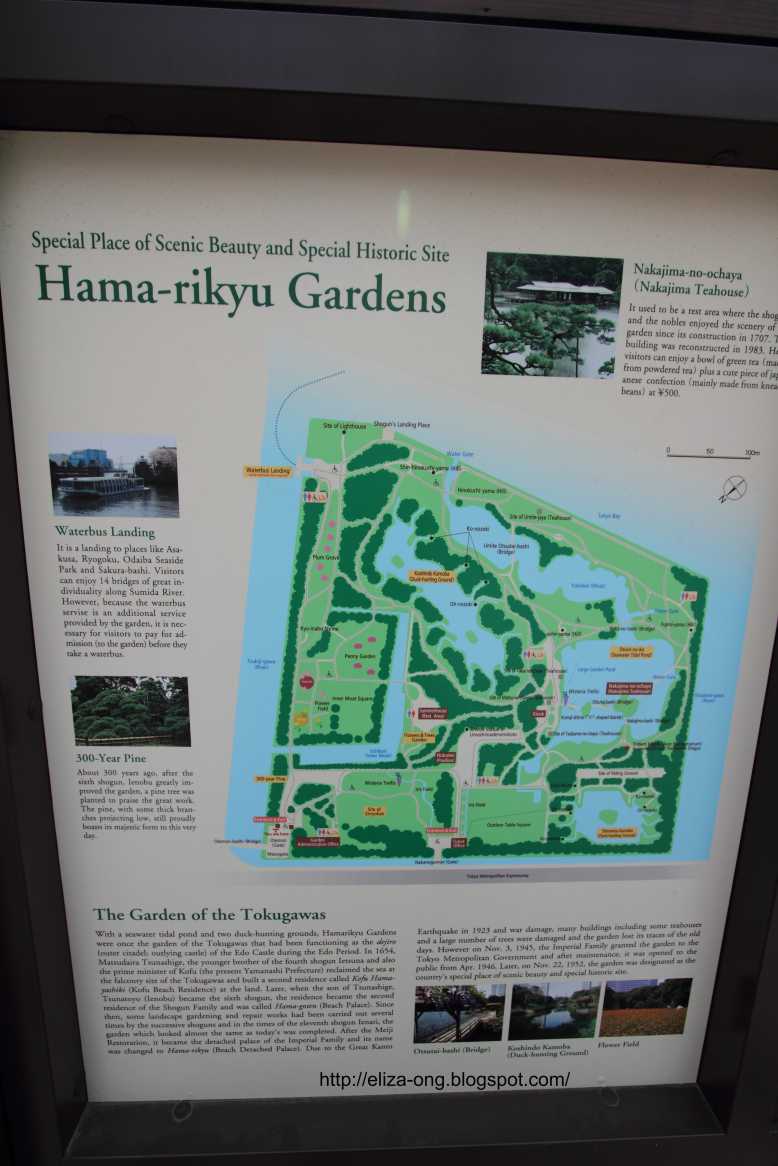
Despite the towering buildings that crowd Tokyo city, pockets of green oasis can be found to get away from the crowds. Located alongside Tokyo Bay and within walking distance from Tsukiji Market, the Hama Rikyu is a wonderful garden to visit for a change of scenery. It also has historical significance as it was once the garden of the shogun lords during the Edo period.

After a fresh sushi breakfast from our early morning visit to Tsukiji Market, it was very pleasant to stroll around the well-landscaped garden. The garden opens at 9am and has an entrance fee of 300 yen. The jewel in the crown in the Hama Rikyu garden is probably the historic 500 year old pine tree.

To preserve this piece of living history, support beams have been built to hold up its sprawling branches, not unlike a bent old man needing a walking stick to support his weight. With skyscrapers in the background, this is a classic example of the harmonious relationship of modern and old Tokyo.


We were thrilled to discover a cherry blossom tree that was still flowering in mid-May. We can only imagine how spectacular the garden would have looked during peak cherry blossom season...


We found a spot on a hill to enjoy the full splendour of the Hama Rikyu Garden whilst enjoying our dessert picnic of Mochi (Japanese rice cake made of glutinous rice) which we picked up from Tsukiji Market.


If you're tired from all the walking (during our entire trip, we did the most walking in Tokyo!), catch a Tokyo cruise (720 yen) from Hinode Pier to Asakusa.

Whilst, it may not be the most scenic city cruise, it is nice to give your aching feet a rest and enjoy the breeze on your face during the 40 minute ride. If you like, you can even count the number of bridges you pass (Hint: it's more than 10).


At Asakusa, we headed to the Nakamise shopping street, a delightful area for souvenier shopping and more food tasting! We even managed to pick up a treat for our beagle from one of the stalls.


The Nakamise shopping street leads to the main grounds of Sensoji Temple.

Take some time to admire the intricate designs of the lamps on the red entrance gate.


We finished off our half day outing with a late lunch at Kagetudo, a rather cramped traditional restaurant. The small interior is decorated with old pictures. Tacked on its wooden walls, bags of toys (some of them reminds me of toys from my childhood days) are for sale.

This restaurant specializes in two main items. The main meal is a selection of cold or hot udon/soba noodles with tempura.


To finish off the simple meal, try the sweet Japanese bun (similar to polo bun). All in all, good value for money and a nice way to end our half day trip to Hama Rikyu Gardens and Asakusa.

Wednesday, June 23, 2010

The Best of Tokyo - Tsukiji Fish Market

The Tsukiji Fish Market ranks highly on my Tokyo to-do list. Generally, I am not a big fan of wet markets because they're crowded, dirty, wet and smelly. The Tsukiji Fish Market surprisingly is not dirty or smelly. It is busy and the floors are slippery, so do be careful and wear covered shoes with good grips.


When you're planning your holiday in Tokyo and want to include Tsukiji Fish Market in your itinerary, check out the calendar on the Tsukiji Fish Market website to make sure that the market is open on the day you plan to visit. Most tourists visit Tsukiji to see the tuna auction in action. On certain busy periods of the year, the tuna auction is off-limits to tourists. If you're lucky enough to be in Tokyo when viewing the tuna auction is permitted, make sure you're there early (officially 5.30 - 6.00 am, although I'm aware that some people are there even earlier). Even if the tuna auction is closed off to public, it's still worthwhile to make a trip to the market. The plus point is that you don't have to be there so early.

The closest train station to Tsukiji market is the Tsukijishijo Station on the Oedo line, which is about 1 minute walk to the market. You can also access the market via different stations served by the Hibiya, Asakusa, Ginza and JR Yamanote lines but be prepared for a 10-20 minute walk. Also take note that if you plan to be at Tsukiji before the trains start running in the early morning, you would need to take a taxi.

Outside the market, we came across a map of Tsukiji Market on the wall. To be honest, it wasn't much use to us in the end because once you're inside, it's easier to just wander around than to try to follow a map!


Tsukiji Fish Market is a working market. This means that for the vendors and buyers, this is business. As a result, a lot of them have very little patience with visitors getting into the way because they are too engrossed with taking pictures or admiring the fresh produce! So, do be mindful when you are in the market. The narrow pathways narrow are shared by both buyers and special market "trucks" that resemble steam rollers.


When we entered the market, we came across this stall selling dried seafood. We couldn't resist the wonderful selection of anchovies and Hokkaido scallops and walked away with a couple of bags.


We then wandered around the stalls (always mindful not to get in the way) admiring the wonderful and sometimes strange (to us anyway) range of fresh seafood.


When your stomach rumbles for breakfast, head outside to one of the many restaurants for a fresh sushi breakfast. I know it sounds strange to have raw seafood for breakfast, but it's one of those unique experiences when visiting Tsukiji Market, so we dived in. There were a couple of restaurants with long queues but we didn't want to wait so we opted for a cosy place nearby which was busy but was able to accomodate us. Once seated, we took a look at the picture set menus.


J opted for a Bentomi don (a variety of raw seafood topped on a bowl of rice)...

...whilst I chose a more traditional Sazanka sushi set. In the end, we both agreed that the sushi set was a better option for our taste.


To top off our delicious sushi breakfast, the chef, who was really intense when he was preparing our meal turned out to be a real sport, serving our trays with much gusto and musical accompaniment. He happily posed for us with a cheery "Cheeso" (the Japanese variation of "Cheese").


We later walked around the shops surrounding the market, wishing we had room in our stomachs to sample the tantalising snacks.


We rounded off our outing to Tsukiji with a cup of brewed coffee at Yonemoto, a local coffee shop. Somehow, breakfast isn't complete without a cuppa!


Our next stop for the day - the nearby Hama Rikyu Gardens.

Tuesday, June 22, 2010

The best of Tokyo - Culture

Tokyo - you either love it or hate it. Some say it's way too busy and crowded. Others love the hustle and bustle. I personally think that there is something for everyone - from shrines to palaces, haute couture to street fashion, Disneyland to Cirque, electronics to gadgets, sushi to ramen...just take your pick! The next few posts lists what I really enjoyed about Tokyo.

Culture - Meiji Jingu (Shrine)
Whilst Tokyo is very much a cosmopolitan city, surrounded by tall buildings and neon lights, there are pockets of culture that is very much a part of this multi-faceted city. One of my favourites spot for culture is Meiji Jingu. To avoid the crowds, make an early start to this Shinto shrine which is located in a lovely garden (take the Fukutoshin line to Meijijungumae, JR exit, South Shrine Gate). At the start of the park, you will be greeted by tall imposing wooden gates that are typical of Shinto shrines.


Along the way, witness the face-off of sake drums versus wine barrels.


If you're wondering why there are wine barrels on the road to a Shinto Shrine, read about the philosophy of Emperor Meiji on Japanese Spirit and Western Knowledge.


After a lovely stroll shaded by tall trees, you will arrive at the entrance of the shrine.


Typically, before you enter the shrine, visitors will perform a ritual cleansing of hands and mouth. As a foreigner, don't worry if you don't know what to do. There is a sign to assist you. Whatever you do, don't drink the water from the ladle. We saw some visitors doing so - not very hygenic at all!


For 500 yen a piece, Shinto believers can offer up prayers and gratitude written on a wooden tablet to the deities.


As with places of worship, Meiji Jingu is also a place where weddings take place. We noticed that Japanese wedding family and guests typically wear black for weddings, which is a big no no for Chinese weddings.


And if you don't mind tourists snapping away, you can also take your wedding photos at Meiji Jingu!


Meiji Jingu gets my vote for an experience of Japanese culture and religion in Tokyo.

Sunday, June 6, 2010

Tokyo Experience - Navigating Shinjuku Station

There is much to see and do in Tokyo. Admittedly, we didn't get to experience Tokyo in its full "busyness" as we were there during the Golden Week holidays. So we didn't have to be squished into the trains during peak period, or encounter the hordes of work crowds crossing the streets of Tokyo.

Our first experience of Tokyo city was Shinjuku station, probably the busiest train station in the world serving more than 3 million passengers per day. Arriving on the Narita Express (we got the NEX + Suica pass), our first order of the day was to go to the Odakyu Information Centre to collect our Hakone Free Pass. This was not an easy task. First-time visitors to Tokyo and Shinjuku Station can attest to the daunting size of this train station. It serves as the hubs for the JR, Odakyu, Keio, Tokyo Metro and Toei Subway. Get a copy of the Tokyo subway map from the Narita Airport Information Counter as well as a copy of the JR trains to help with your Tokyo travel.

Whilst it's fairly easy to catch the trains operated by the different train companies - follow the signs and make sure you have allocated enough time because some stations can be a couple of kilometres apart, it's more complicated trying to locate the exit you need to take (there are about 200 exits) or as in our case, locate the Odakyu Information Centre. Add the language barrier to the equation, you have four jet-lagged tourists climbing up and down the stairs asking for directions, being led on a wild goose chase.

We managed to locate the Information Centre after about 1/2 and hour or so of traipsing round and round. The Odakyu Information Centre has dedicated personnel to assist foreign visitors so we had no issues getting our passes. By then, we were more than ready for lunch. Options are plentiful as the Shinjuku Station is connected directly to at least 8 malls. The department stores are a great place for food. You can either opt for the bento sets at the basement of the deparment stores or check out the restaurants at the top floors. We headed to the top floor of the Odakyu Department Store, just above the Odakyu Line Concourse. We had our first Japanese meal of our trip - tempura and cold soba, the first of many delicious meals. One of the best tips we learnt about eating in Japan is to check out the menu boards in front of the restaurants. The pictures of the food sets and prices can help you decide what to eat. Make sure you remember which one set you want because the restaurant may not the English language daily special menu in the restaurant. If the restaurants don't have a menu board outside, chances are it's quite an upscale restaurant.

After a very satisfying lunch, we headed towards the Marunouchi Subway line to catch the metro train to Shinjuku Gyoenmae to go to our hotel. Which brings me to my next tip - it's probably easiest to stay at a hotel near to smaller station like Shinjuku Sanchome or Shinjuku Gyoenmae. That way you can avoid the experience of trying to locate the exit you have to take out of the 200 exits at the main Shinjuku Station.

"The only way to be sure of catching a train is to miss the one before it"
GK Chesterton

Sunday, May 30, 2010

What Living in Thailand Taught Me

A friend of mine was lamenting about the language challenges of visiting Japan. As a result, he did not enjoy his travels to Japan. On the other hand, despite my lack of Japanese language skills, I loved my trip to Japan. I pondered about our two different reactions to the same circumstance.

My conclusion? Living in Thailand has made me more open to visiting a foreign country where English is not the first language and is not widely used by a wide majority of the locals. I admit it was tough going for me the first couple of months living in Bangkok. I remember my frustration during my first grocery shopping trip. I could not figure out the laundry detergent to buy for my top-loader washing machine because all the packaging was in the Thai language. Thankfully, I later found another supermarket that had small English labels on the shelf. There was another time when we were eating at a local open-air restaurant. As we were not well-versed with the Thai language at that time, we pointed to a dish that another patron was eating, thinking it was fried squid. When our dish came, it turned out to be fried intestine!

There are probably a dozen or more such stories - driving on an unfamiliar highway interstate and not being able to read the Thai detour directions, having to memorize a few local Thai dishes names so we could order at local shops when we travelled out of Bangkok, not being able to understand the commentaries when watching a Thai performance, etc, etc. As a result of having experienced first hand the language challenges of living in a foreign country, I think that I have become more accepting of people who don't speak English and perhaps, even more adaptable when visiting a country like Japan.

Live and learn!

Monday, May 24, 2010

Top 10 Tips for travelling in Japan

I just came back from two weeks in Japan - travelling the recommended route from Tokyo to Kyoto, with stopovers in Hakone (the land of Onsen) and Takayama (the land of Hida beef). It was one of my best holidays. Despite the language challenges, travelling in Japan on your own is very do-able. Here are my tips for travelling on your own in the Land of the Rising Sun:

View of Tokyo city from the Metropolitan Government Building


Lake Ashi, Hakone


Hida Folk Village, Takayama


Golden Temple, Kyoto


Before the Trip
1) Do your research before hand! This will help you decide on your itinerary and keep you posted on latest events.
- Go online to the travel websites - Frommers, Lonely Planet, Fodors,Japan National Tourism Organization,Japan guide
- Buy a travel guide book (it's worth the investment!)
- Visit the travel forums on the travel websites. You will find useful tips from the questions posted and answers provided by the regulars

2) Get accomodation reviews from Trip Advisor
- So far, I've not been disappointed by my hotel choices based on the reviews provided by Trip Advisor users.

3) If travelling by train, use Hyperdia to plan your travel times and budget.
- Note that the Japan Rail Pass may not be worth it if you don't make a return trip from Tokyo to Kyoto. Use Hyperdia to help you evaluate.


During your Trip
4) Use the Takkyubin (luggage forwarding services)
- If you have a big luggage bag, make use of this unique service to transport your luggage from the airport to your hotel and from one destination to another. This will save you the hassle of lugging your luggage up and down the stairs in the train stations and to your hotel. We used Yamato or Black Cat on our trip. Very reliable. You would need to pack one day's clothing with you as delivery is often the next day.


5) Buy a Japanese language pocket book
- This will help with basic communication. It came in handy for us in asking about food!

6) Wear comfortable walking shoes
- You will be doing lots of walking - Apart from walking for sightseeing, some of the major train stations like Shinjuku and Tokyo Stations are huge! So be prepared for lots of walking.
- If possible, wear slip on shoes and make sure your socks don't have holes. Some temples, shrines and even accomodations, especially Ryokans and inns require you to take off your shoes before entering. Slip ons are just more convenient.

7) Speak softly on trains
- The Japanese are by nature soft-spoken and polite. On trains, most Japanese don't carry out conversations. Instead, they read or play with their phone. In fact, we discovered that the Japanese love to use the flip phones, the reason being that the the longer phone allows them to speak closely (and hence, softly) on the phone!

8) Bring a large suitcase, if you're a foodie
- We came back with one suitcase filled with Japanese delicacies, ranging from soba to mochis and green tea Kit Kat! In fact, the food markets was one of our favourite places to visits - Tsukiji Market and surrounding shops in Tokyo and Nishiki Market in Kyoto.

Tsukiji Market surrounding area


9) Buy your duty free Japanese whisky and sake on your way in if you don't have a direct flight home. We found out the hard way and missed out on the Japanese whisky (which can only be bought in Japan) because we were transiting in another country.


10) Go with an open-mind!
- Be open to the culture, food and people. Visit the temples and shrines, markets and department stores. Go for a cultural performance and enjoy the street fashion of Harajuku. Try some unagi and black bean tea.

- Don't be afraid of the language barrier. You'll be amazed at the generosity and graciousness of the Japanese people. Sure, we had challenges in asking for directions at Shinjuku Station as not many people whom we asked could speak English well. But we also encountered a well-spoken Japanese young man who approached us whilst we were trying to decipher the map at Shinjuku Station and went out of his way to take us to the Metropolitan Government Building.

If you reject the food, ignore the customs, fear the religion and avoid the people, you might better stay home.


James Michener

Monday, April 19, 2010

If at first you don't succeed...

... try and try again"

Today, I managed to do a roll-over* at my Pilates mat class. I've been struggling with this exercise in past classes and have never managed to do a successful roll over on my own. So, when my Pilates instructor told us to do the roll over exercise three-quarters way through the class, I mentally groaned and thought to myself "Oh no...". Anyway, I gave it a go. To my utmost surprise, I actually managed to perform this exercise on my first attempt. I could not believe it. It was probably not the most graceful roll over, and yes, I needed to use my hands to support my buttocks to assist the roll over - but I did it! I still have to keep working on it to refine my technique and learn to roll down properly but after a taste of success today, I am confident that I will be able to master this exercise not too far in the future.

The key to success is to keep trying, keep practicing, keep going. And when success finally comes, it will taste so much sweeter because of all the sweat (literally, in this case) and tears (for all the aching muscles after each class).

So whether it's trying out a Pilates exercise, or learning to ride a bike, or sitting for a test, or going for a job interview, or securing a business deal, if at first you don't succeed, try and try again. Don't give up. Success comes to those who work at it!

* Generally, a roll over exercise involves lying on your back with your hands by your side and extending your legs upwards at a 90 degree angle. Using your abdominal muscles, you then draw your hips and legs over your head until your legs are parallel to your chest. Deepening your abdominal muscles, roll onto the broad part of your shoulder. Slowly roll down, using abdominal control to peel down one vertebrae at a time.